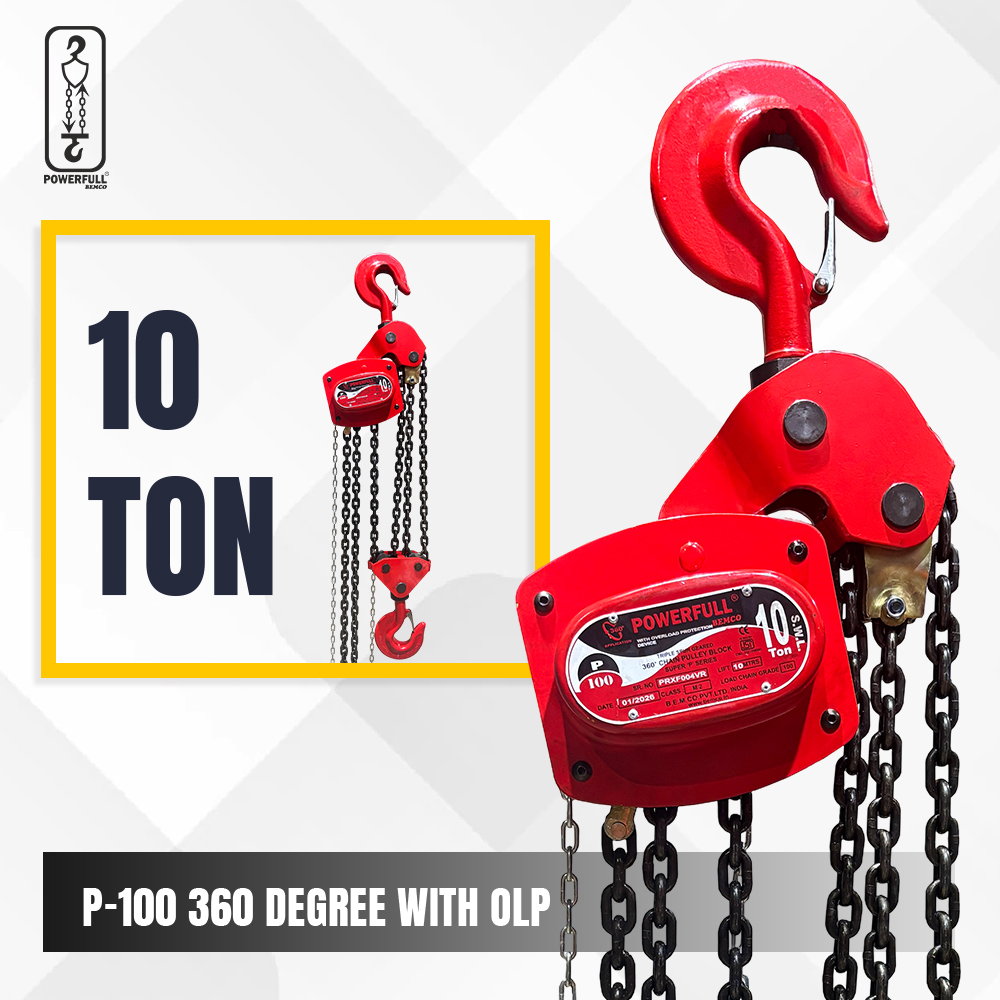
Leading Overload Protection Device Suppliers In India
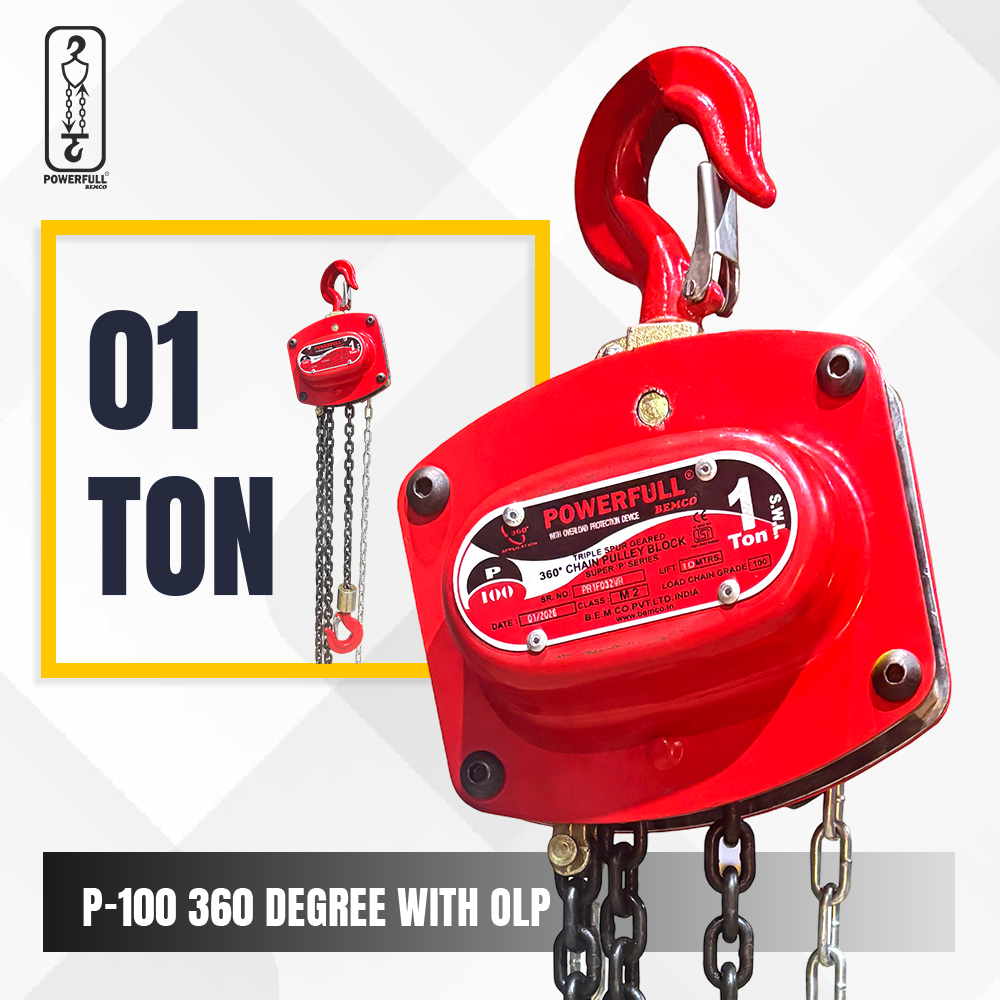
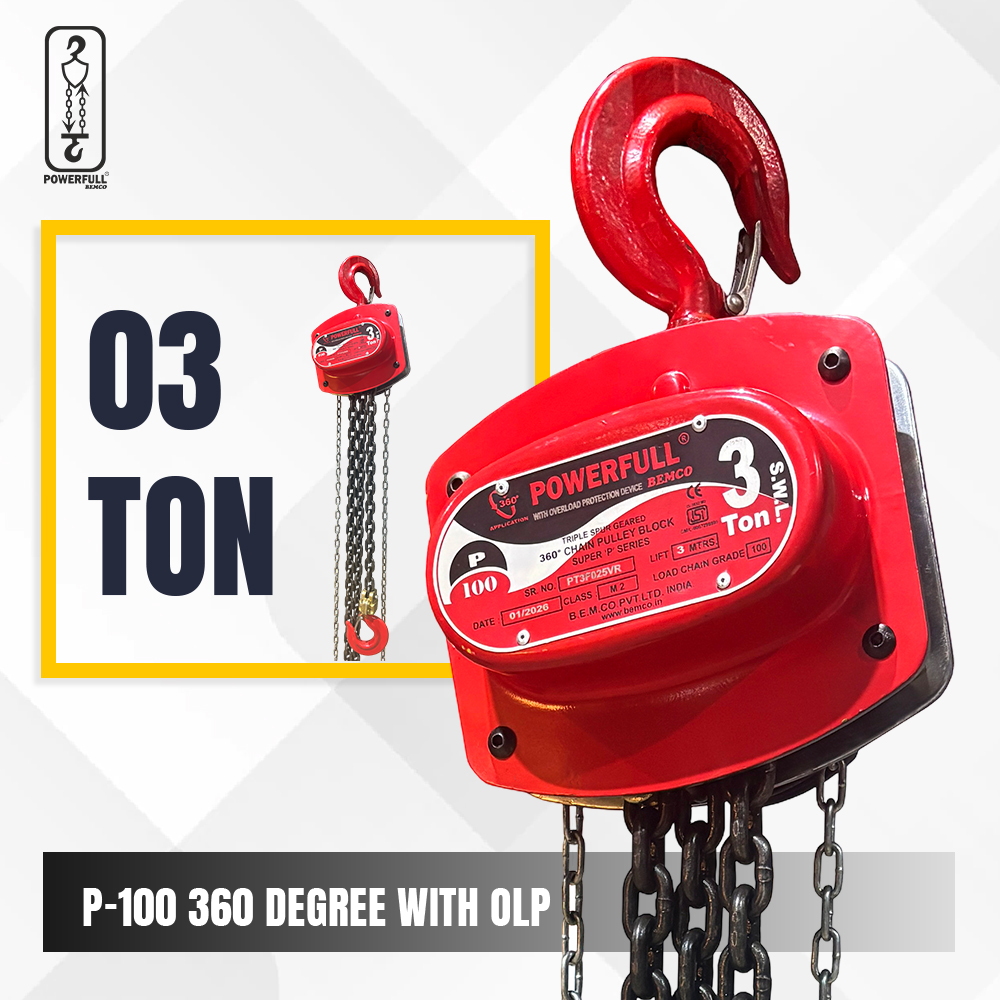
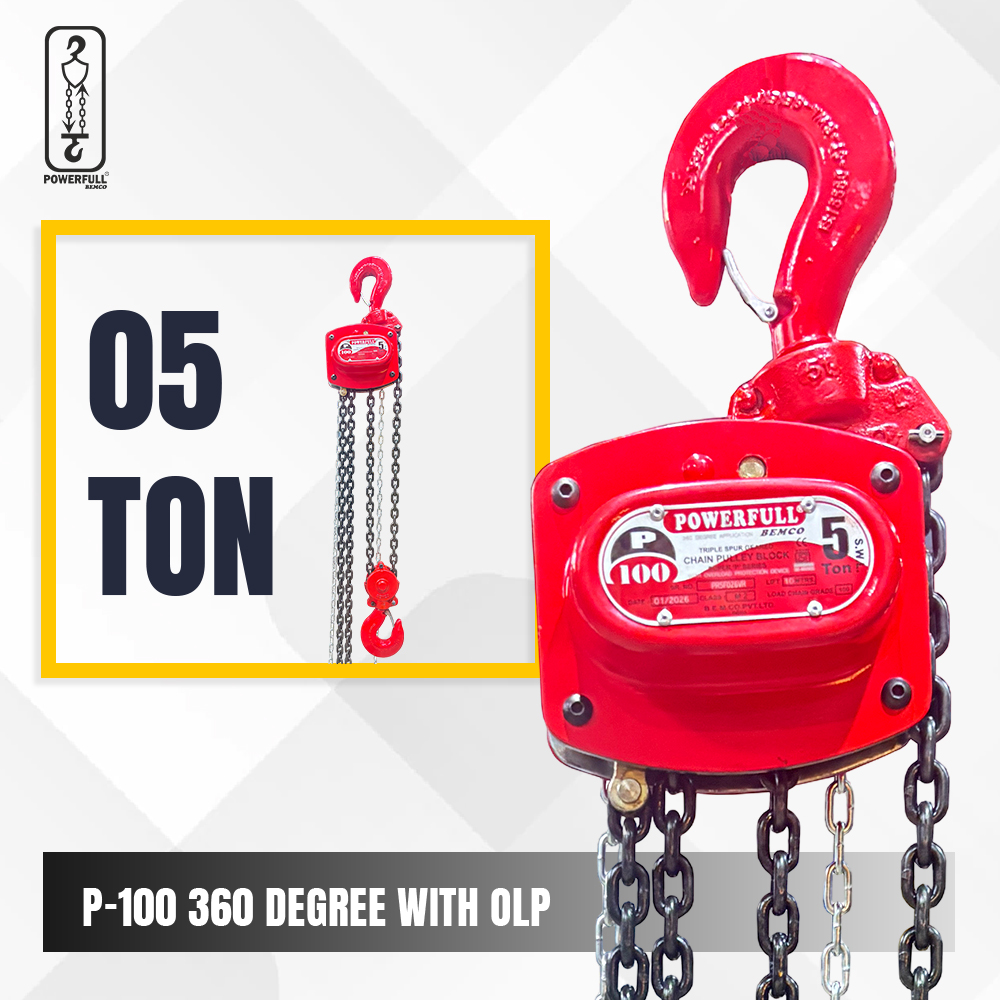
B.E.M.Co Pvt. Ltd. is renowned in the industry for its innovative products which are developed and catered to counter the problems that the end user encounters while lifting loads. Overload Protection Device (OLP) as the name suggests makes sure that the CBP is not misused
Most Trusted Suppliers In India.
This feature combines the strength of Triangular model with a clutch system which makes it nonfunctional once the CBP is loaded above permissive load. It comes with a clutch mechanism which will automatically slip once the load crosses the Safe Working Load.
It comes with a clutch mechanism which will automatically slip once the load crosses the Safe Working Load. This feature saves the Chain Pulley Block from getting damaged or avoids any kind of accidents due to misuse or lifting beyond permissible load at the site. To ensure the quality of the product for the satisfaction of our customers we pass our products through test is given below: Proof Load Test Certified from Govt. approved Test House as per Indian Dock Labour Regulations (S.H.W) 1990
Team Of Highly Experienced Professionals
Features & Specifications
Features & Specifications Of Overload Protection Device Chain Pulley Block
ISI Certified
With overload protection device - makes it more reliable for avoiding misuse and accidents. Set at 100%
Overload tested to 150% of safe working load (Working load limit) but the model is set at 100% to Safe Work Load.
Load Wheel mounted on standard “ Big Ball- bearings”
It is a built-in safety mechanism that stops the block from lifting more than its rated capacity. When someone tries to lift an overloaded load, a friction slip clutch inside disengages smoothly. The hand chain keeps moving but the load chain does not. The load stays where it is.
It is factory set to activate between 110% and 150% of the rated capacity. That gap is intentional. It prevents the device from triggering during normal load shifts or rigging adjustments, while still stopping the lift well before anything is at risk of breaking.
Yes. The brake and the slip clutch work independently. If the clutch slips during an overload attempt, the mechanical load brake stays fully engaged. The load does not drop or slip. It holds exactly where it was.
No. It is calibrated at the factory on a test bench. Do not try to adjust it on site. Getting it wrong can disable the safety function entirely. Any recalibration should only be done by a certified engineer during a scheduled inspection.
No, it cannot be added as an aftermarket part. The internal design is different. It needs a specific hub, modified gear housing, and custom drive shaft. It has to be bought as a complete factory-built unit from the start.
Without one, an overload attempt forces excessive stress into the system. Chains stretch, gear teeth crack, hooks bend. The slip clutch absorbs that force before it reaches the internal components. Less damage means fewer repairs and a longer working life for the block.
Yes, but the block needs to be specifically ordered with ATEX certification for that use. Standard overload-protected blocks are not suitable for those environments on their own. The hazardous area version comes with copper or bronze-coated hooks, stainless steel hand chains, and anti-friction materials to eliminate spark risk when the clutch activates.