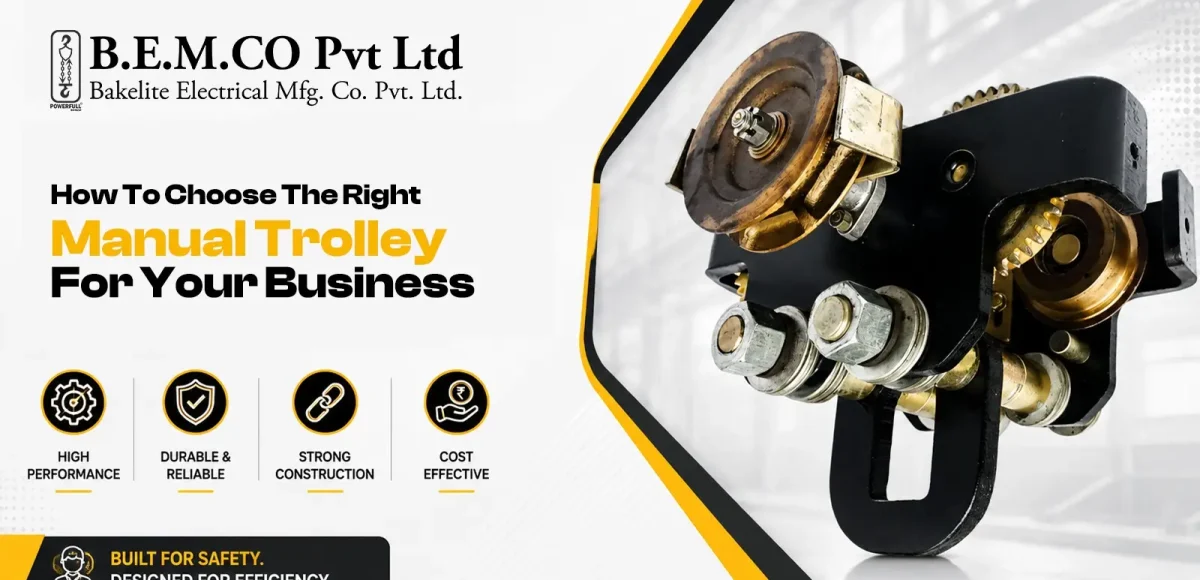
How to Choose the Right Manual Trolley for Your Business
Overview: A manual trolley looks like a simple piece of equipment, but choosing the wrong one can slow down your daily work more than people expect. Wrong wheels, wrong load capacity, or wrong build for your floor type can lead to damaged goods, tired workers, and lost time every single day. This blog explains how to think through the choice properly so the trolley you buy actually fits the way your business moves material.
This Blog Covers:
Introduction
Many businesses treat trolley buying as a small decision, something to finish quickly without much thought. This is a mistake. A poor quality manual trolley can slow down daily operations, tire out your staff faster, and even damage the goods being carried. This blog will walk you through what actually matters when choosing one, from load capacity to wheel type, so you end up with equipment that genuinely helps your business rather than becoming a daily headache.
Why the Right Trolley Matters More Than It Looks
At first glance, a trolley seems like the least important purchase in a warehouse or shop. That thinking often costs businesses more than they realize later.
- A good manual trolley speeds up daily movement of goods, since workers spend less time struggling with equipment that does not roll smoothly or carry the right weight.
- Poor trolley choice increases the chance of workplace injury, particularly back strain, since workers end up pushing or pulling harder than needed.
- Damaged goods during transport is another hidden cost. A trolley that is unstable or too small for the load often leads to items falling or shifting during movement.
- Over time, a well chosen industrial manual trolley actually reduces cost, since fewer breakdowns and fewer injuries mean less money spent on repairs and replacements.
Load Capacity and Build Quality to Check
Getting the weight rating right is the first thing to settle before anything else about the trolley matters.
- Check the maximum load capacity the manufacturer has listed, and try not to load the trolley close to that limit on a regular basis. Doing so wears it down faster than expected.
- A load handling trolley with a stronger frame, usually steel, holds up far better under daily heavy use than a lighter build meant only for occasional jobs.
- Look closely at the welds and joints before you decide. Rough or uneven welding is often a sign of weaker construction, even when the trolley looks fine from a short distance.
- Handle design is easy to overlook, but it matters. A proper grip handle takes strain off the hands and wrists, especially across a long shift of pushing and pulling.
- For businesses that regularly move heavier items, a manual lifting trolley with a built-in lifting mechanism saves a good deal of physical effort compared to a plain flat platform design.
Wheels, Floor Type, and Manoeuvrability
Wheels decide how well a manual trolley actually performs on the ground, and this part gets overlooked more often than you would think.
- Rubber wheels suit smooth indoor floors well, and they keep noise down too, which matters in offices or retail areas where quiet surroundings are preferred.
- Polyurethane wheels last longer under rougher use. Factory floors and outdoor areas usually call for this type rather than plain rubber.
- Front wheels that swivel make turning in tight corners much easier, while fixed wheels at the back keep the trolley steady when pushing it straight.
- Before buying, walk through your actual aisles and doorways with a measuring tape. A trolley that cannot turn properly in your real workspace becomes a daily annoyance, no matter how good the other features look on paper.
- If your floor has even a slight slope anywhere, wheel locks are worth having. This one small feature stops the trolley from rolling away on its own while goods are being loaded or unloaded.
Matching the Trolley to Your Specific Work
There is no single trolley that suits every business, so matching the equipment to your actual daily tasks makes the biggest difference.
- A warehouse trolley used for general stock movement is usually different from one meant for a retail floor, since warehouse work often involves heavier and bulkier items.
- Think about how often the trolley will be used in a single day, since equipment built for occasional use rarely holds up under constant, daily operation.
- Consider the shape of what you are carrying. Flat platform trolleys suit boxes and cartons well, while cage or basket-style trolleys suit loose or irregular items better.
- If your team works across multiple floors or uneven surfaces, a more rugged manual trolley with larger wheels will hold up better than a lightweight model.
- Do not buy based on price alone. A cheaper trolley that wears out within a year often costs more in the long run than a slightly costlier one that lasts several years.
Where Bemco Fits Into This
Bemco manufactures a range of manual trolley models designed for daily industrial and warehouse use, built with the load capacity and durability that regular business operations actually require. If you are trying to work out which type suits your specific work floor, it may help to speak directly with the team to guide you toward the right fit for your business.
Frequently Asked Questions
How do I know what load capacity my manual trolley should have?
What is the difference between rubber and polyurethane wheels on a trolley?
Can one manual trolley handle both light and heavy loads?
How often should a manual trolley be checked for wear?
B.E.M. Co. Pvt. Ltd. (Bakelite Electrical Mfg. Co. Pvt. Ltd.).
Bakelite Electrical Mfg. Co. Pvt. Ltd. is a well-known Industrial Chain Pulley Block Manufacturer in India since 1959. Our lifting equipment is in high demand as they can easily lift heavy materials.
