

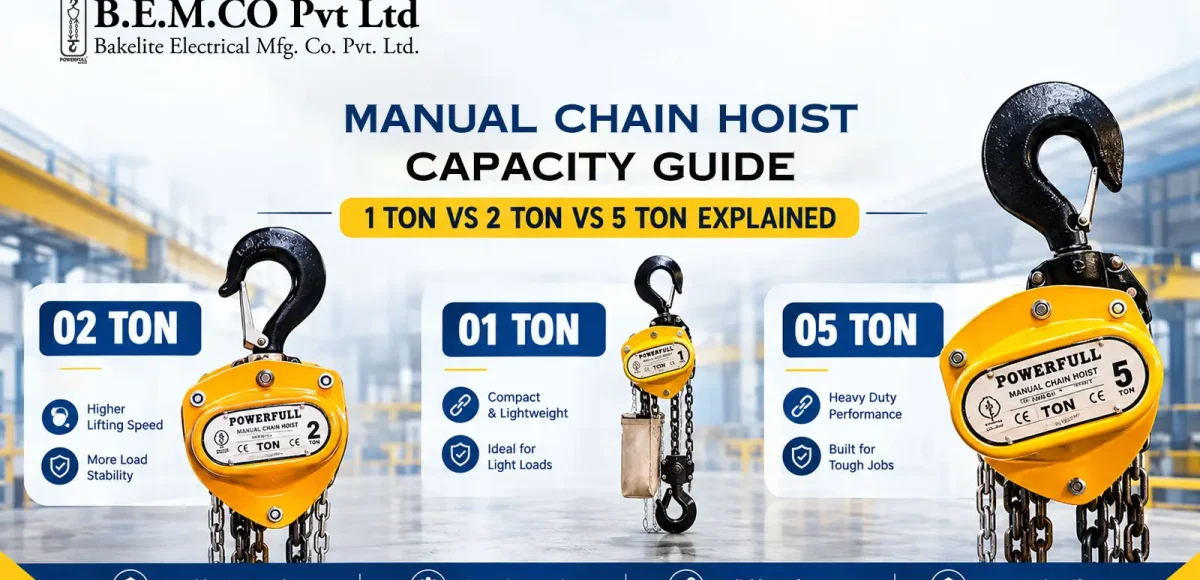
Manual Chain Hoist Capacity Guide: 1 Ton vs 2 Ton vs 5 Ton Explained
Overview – A Manual Chain Hoist does the same basic job at every capacity; it lifts a load using a hand chain pulled through a gear system. But a 1 ton, a 2 ton, and a 5 ton hoist are not simply the same machine made bigger or smaller. The gear ratio, the hand chain pull needed, the number of chain falls, and even the size of the hoist body all change as capacity goes up. This blog explains what actually changes between these three common capacities, so you can pick the right one for your job instead of guessing.
This blog covers:
This Blog Covers:
Introduction
Buying a manual chain hoist just because it roughly matches your load weight is a common shortcut, and it does not always work out well. A hoist rated too low simply cannot lift the load safely. A hoist rated too high does the job, but it is bulkier, heavier to handle, and needs more pulls on the hand chain to lift the same distance, which slows the work down and tires out whoever is operating it. Knowing what changes between a 1 ton, 2 ton, and 5 ton hoist helps you pick a size that actually matches the work at hand.
What Stays the Same Across Every Capacity
A few things stay the same no matter which capacity you pick. Every manual chain hoist works using a hand chain, a load chain, and a set of gears inside that turn the force you put in through the hand chain into enough force to lift the load. You pull the hand chain, the gears turn, and the load chain winds up or down, and this basic way of working does not change from one capacity to the next. What changes as capacity goes up is how much gearing is needed to make that lifting force big enough, and that is where the real difference between models starts to show.
1 Ton Manual Chain Hoist
A 1 ton hoist is the size most workshops reach for first, since it covers a wide range of everyday lifting work without being bulky or hard to carry around. The gear ratio on a 1 ton hoist is lower than on the heavier models, which means less hand chain pull is needed to lift the same distance, and the hoist itself is lighter and easier to mount and shift between jobs.
This size works well for maintenance work, small workshop lifting, moving machine parts, and general rigging where the load rarely goes above a tonne. It is also the easiest size to work with for long stretches, since the hand chain effort stays manageable through the day.
2 Ton Manual Chain Hoist
A 2 ton hoist steps up the gear ratio to handle double the load of the 1 ton version, and this shows up directly in the hand chain pull needed. To lift the same distance, a 2 ton hoist needs noticeably more pulls on the hand chain than a 1 ton hoist, since the gearing is doing more work to multiply your effort.
This capacity is common in medium workshops, small fabrication units, and general industrial maintenance, where loads regularly cross the 1 ton mark but rarely go much beyond 2 tons. It sits at a comfortable middle point, heavier duty than a 1 ton hoist but still easy enough to operate by hand.
5 Ton Manual Chain Hoist
A 5 ton hoist is a much bigger machine in comparison. The gear ratio is much higher, the hoist body is bigger and heavier, and depending on the make, it may use double chain falls instead of a single fall to keep the hand chain pull reasonable.
This is where Manual Chain Hoist Capacity really starts to change the size of the machine, since a 5 ton hoist takes up noticeably more headroom and weighs a lot more than a 1 ton or 2 ton unit. It is meant for heavier industrial lifting, structural steel handling, machinery installation, and similar jobs where the load actually needs that much capacity, not for everyday light lifting.
Hand Chain Pull and Why It Matters
Hand chain pull is simply how much force and how many pulls are needed to lift the load a certain distance, and this is one of the most useful things to check before buying any manual chain hoist.
A lower capacity hoist needs less hand chain pull for the same lift, which makes it faster and less tiring to use over a full day’s work. A higher capacity hoist needs more pulls to cover the same lifting distance, simply because the gearing has to work harder to build up enough force for the heavier load. This is why buying a bigger hoist than you actually need is not just a cost matter; it also means more physical effort and more time spent lifting on jobs that a smaller hoist could have handled well.
Which Capacity Suits Which Job
Picking between these three capacities of a manual chain hoist gets much easier once you look at the job’s actual weight and how often it is used, instead of just picking a bigger size to be on the safe side. Most manual chain hoist manufacturers follow a similar capacity chart, though the hand chain pull and exact size can differ a little from brand to brand, so it is worth checking the specifications of the exact model you are buying.
1 ton is usually the right fit for:
- General workshop and maintenance lifting
- Moving machine parts and light equipment
- Jobs where the hoist needs to be light enough to move around often
2 ton works well for:
- Medium fabrication and industrial maintenance work
- Loads that regularly sit above 1 ton but rarely go past 2 tons
- Jobs needing a bit more capacity without the bulk of a heavier hoist
5 ton is built for:
- Structural steel handling and heavy machinery installation
- Loads that actually need higher capacity on a regular basis
- Sites where the extra size and weight of a bigger hoist is not a concern
Where BEMCO Fits Into This
B.E.M.Co. Pvt. Ltd. (BEMCO) has been manufacturing manual chain hoist units since 1959, with capacities ranging from 0.5 tons all the way up to 50 tons, built with a Grade 80 alloy load chain, corrosion-resistant fittings, and ISI certification. As one of the trusted manual chain hoist suppliers, based in Mumbai, the team also supplies spark-resistant versions rated for hazardous areas and can help you work out the right capacity for your job instead of simply selling whatever size is easiest.
Frequently Asked Questions
Does a 5 ton manual chain hoist need much more effort to operate than a 1 ton hoist?
Can I use a 2 ton manual chain hoist for a 1 ton load to be extra safe?
What is the difference between a single fall and a double fall in a manual chain hoist?
Are BEMCO Manual Chain Hoist units available in spark-resistant versions for hazardous areas?

B.E.M. Co. Pvt. Ltd. (Bakelite Electrical Mfg. Co. Pvt. Ltd.).
Bakelite Electrical Mfg. Co. Pvt. Ltd. is a well-known Industrial Chain Pulley Block Manufacturer in India since 1959. Our lifting equipment is in high demand as they can easily lift heavy materials.
